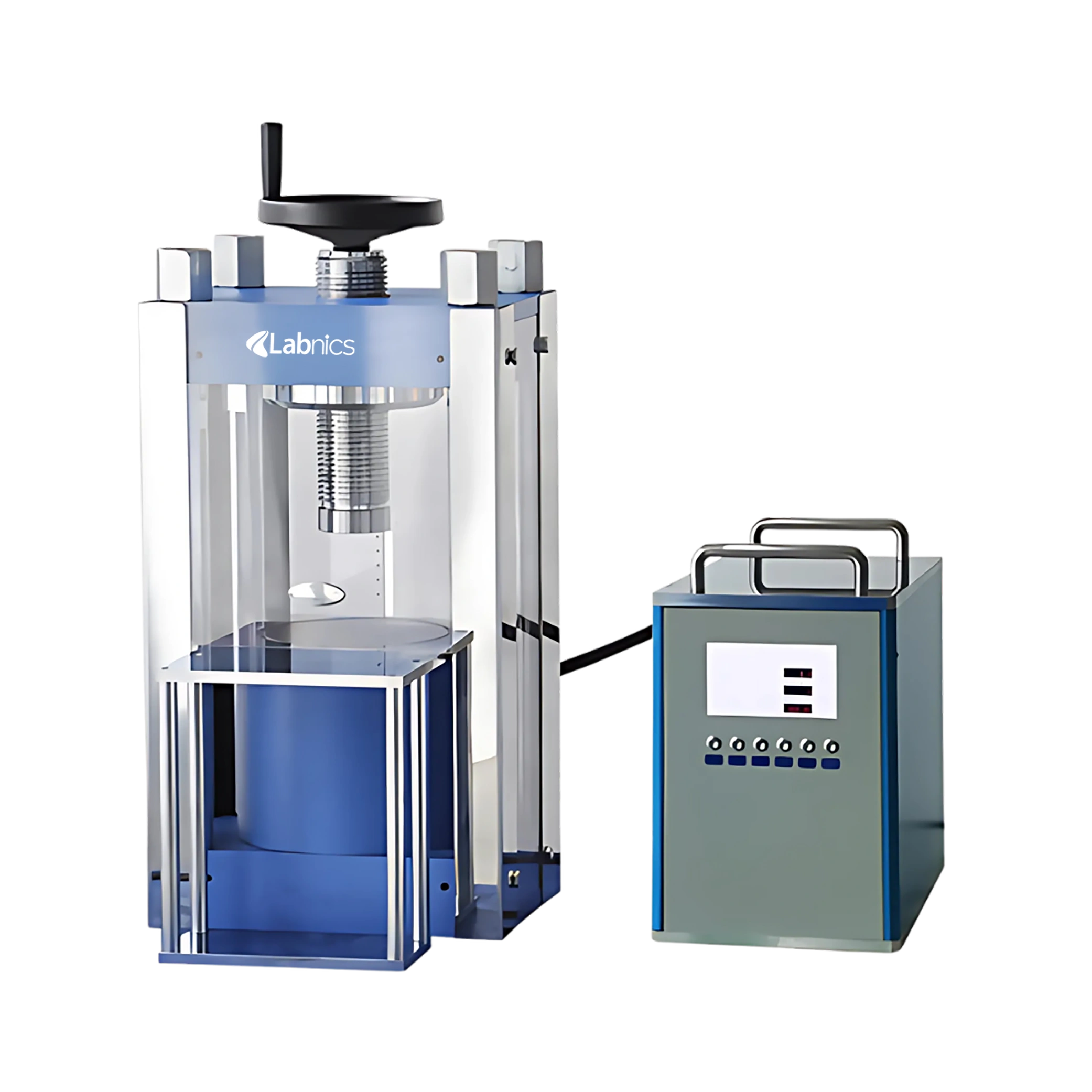
Electric Hydraulic Pellet Press NEHPP-104 is a compact electric press with a pressure range of 0–150 T. It features a maximum pressure stroke of 50 mm for effective sample compression. This system offers a split-type structure for convenient die handling and maintenance. Its electric hydraulic system ensures quiet, clean, and oil-free operation. Our model delivers consistent pressure output for uniform pellet formation in laboratories.
FAQ for Electric Hydraulic Pellet Press NEHPP-104
1: Is Electric Hydraulic Pellet Press NEHPP-104 noisy during operation?
No, Electric Hydraulic Pellet Press NEHPP-104 is engineered for low-noise operation, ideal for lab settings.
2: Can the pressing time and pressure be preset?
Yes, both dwell time and pressure can be preset via the control panel.
3: What kind of maintenance does Electric Hydraulic Pellet Press NEHPP-104 require?
Regular maintenance includes checking hydraulic oil levels, inspecting seals, and cleaning dies.
4: Can the unit handle continuous operation?
Yes, the split type design ensures better cooling, allowing extended operation without overheating.
5: Does Electric Hydraulic Pellet Press NEHPP-104 come with standard dies and accessories?
Yes, Electric Hydraulic Pellet Press NEHPP-104 typically includes a die set, with optional accessories available upon request.
6: What materials can be processed using Electric Hydraulic Pellet Press?
Electric Hydraulic Pellet Press can compress powders, metals, ceramics, polymers, and composite materials.
7: How does Electric Hydraulic Pellet Press differ from a manual hydraulic press?
Unlike manual presses, electric models automate pressure application, offering faster and consistent operation through electricity.
8: Can Electric Hydraulic Pellet Press be integrated with other lab equipment?
Yes, Electric Hydraulic Pellet Press can be used alongside XRF, FTIR, or spectroscopy systems for sample preparation.
9: How long does it take to form one pellet?
Pellet formation usually takes less than 1–2 minutes per sample.