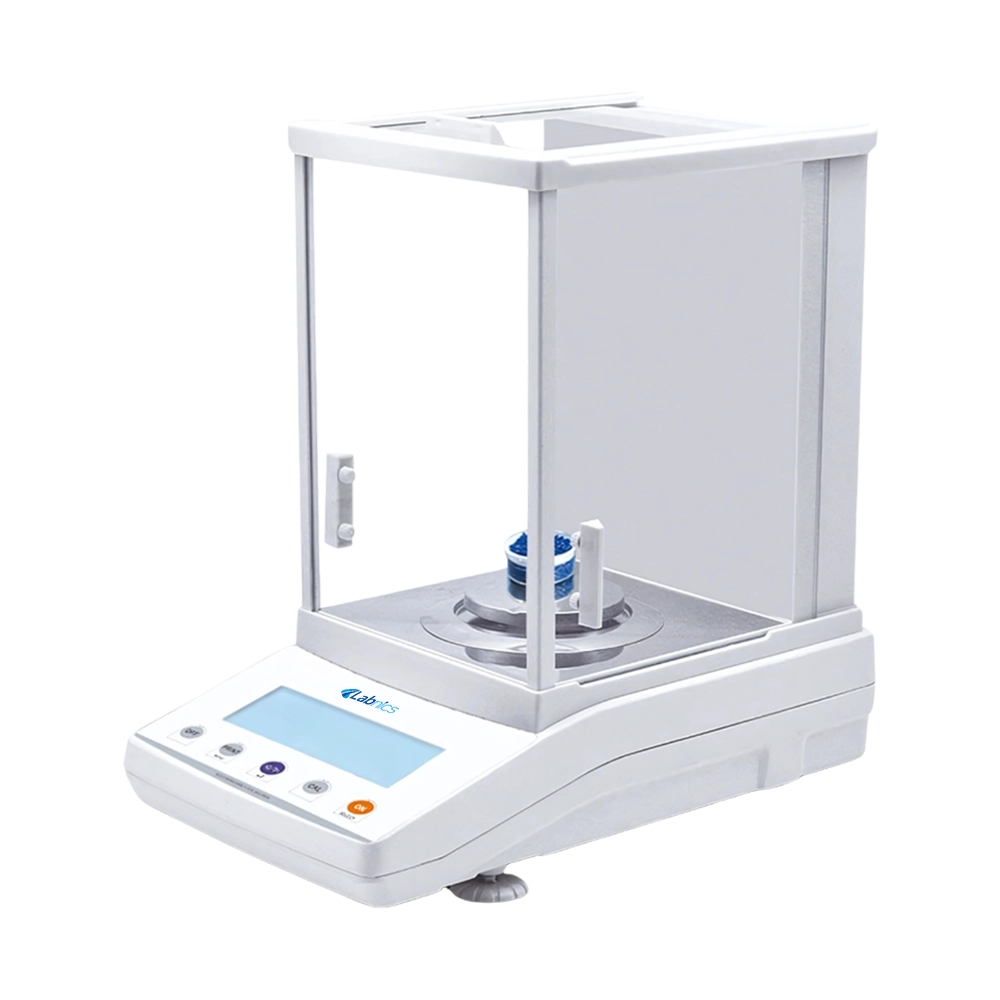
Analytical Balance NAB-306 offers a capacity of 600g, making it suitable for medium-scale weighing tasks. It has a pan size of Φ80mm, providing ample space for various materials. This unit is crafted with an aluminum shell and a large space windproof cover, ensuring durability. It comes with an LCD with white backlighting and black fonts for enhanced readability. Our analytical balance includes overload and fault alarms to alert users of excess weight or malfunctions.
FAQ for Analytical Balance NAB-306
1: What protections are included to ensure safe and accurate operation?
The analytical balance includes overload and fault alarms to alert users of excessive weight issues. It also features a durable aluminum shell and a large draft shield to reduce environmental interference.
2: Can the analytical balance NAB-306 be used for very small sample measurements?
Yes, it has a minimum weighing capability of 0.004g, making it well-suited for both light and mid-range materials that require precise measurement.
3: What is the purpose of the external calibration feature using a 200g weight?
External calibration ensures ongoing measurement accuracy by allowing users to manually verify and adjust the balance, which is particularly important in regulated and high-precision environments.
4: What should I do if the display shows unstable or fluctuating results?
Ensure the balance is placed on a vibration-free, level surface. Close the draft shield, wait for stabilization, and avoid nearby airflow to ensure consistent readings.
5: Which additional weighing functions are included?
The analytical balance supports tare and counting modes, along with adjustable sensitivity and speed settings, enabling more complex weighing tasks across industries.
6: Is the display easy to read in low-light environments?
Yes, the LCD features white backlighting with black font for high contrast and readability, even in dim lab or industrial conditions.
7: Why does the Analytical Balance have a glass shield?
The transparent glass shield is designed to block external air drafts and dust. This ensures consistent weighing conditions and prevents fluctuation in readings. It helps protect both the sample and the measurement integrity.
8: Is the Analytical Balance easy to calibrate?
Most analytical balances include internal or external calibration options. Internal calibration is automatic and ensures precision without manual effort. External calibration allows the use of certified weights to validate accuracy regularly.
9: How durable is an Analytical Balance?
Analytical balances are designed with sturdy materials and a sealed weighing chamber. This makes them durable and resistant to environmental contamination. Proper handling and regular maintenance extend their lifespan.
10: How often should an Analytical Balance be cleaned?
Cleaning should be done regularly, ideally after each use. This prevents dust, residue, or chemical spills from affecting accuracy. Use a soft brush or lint-free cloth and avoid harsh chemicals that may damage internal components.