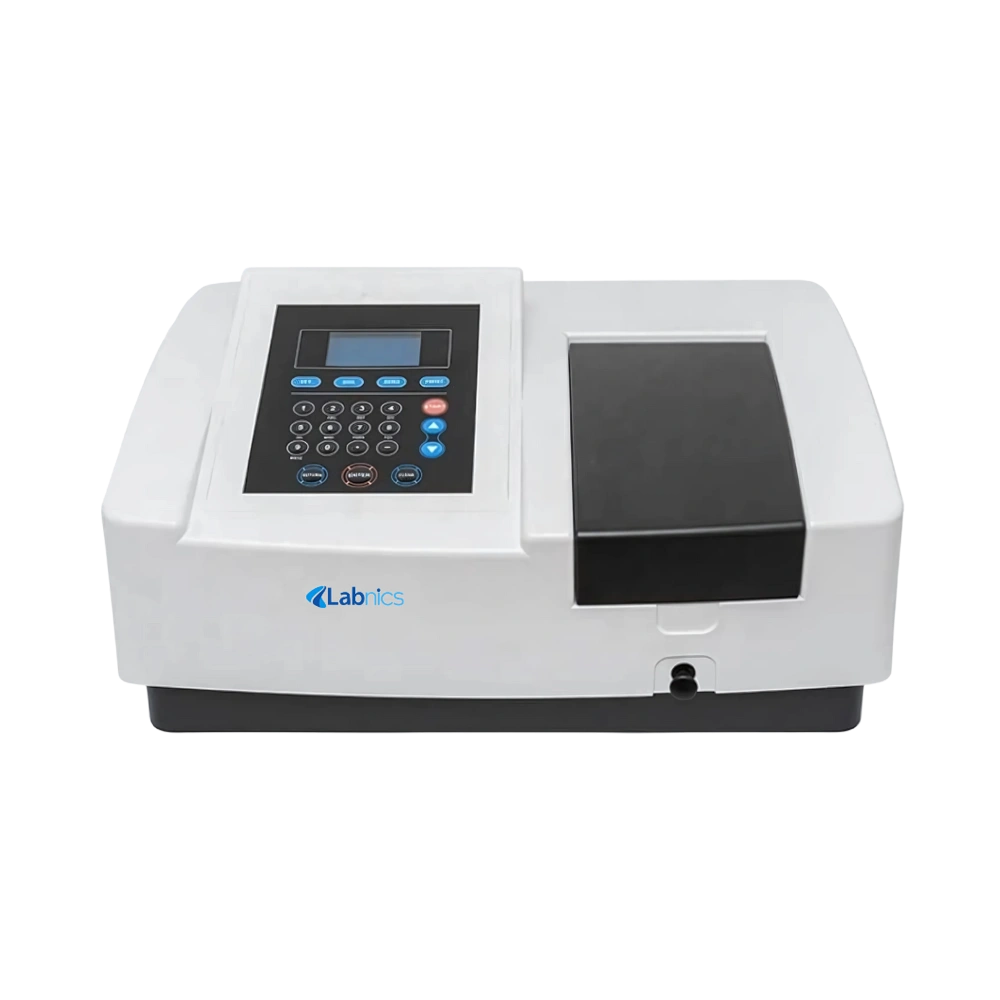
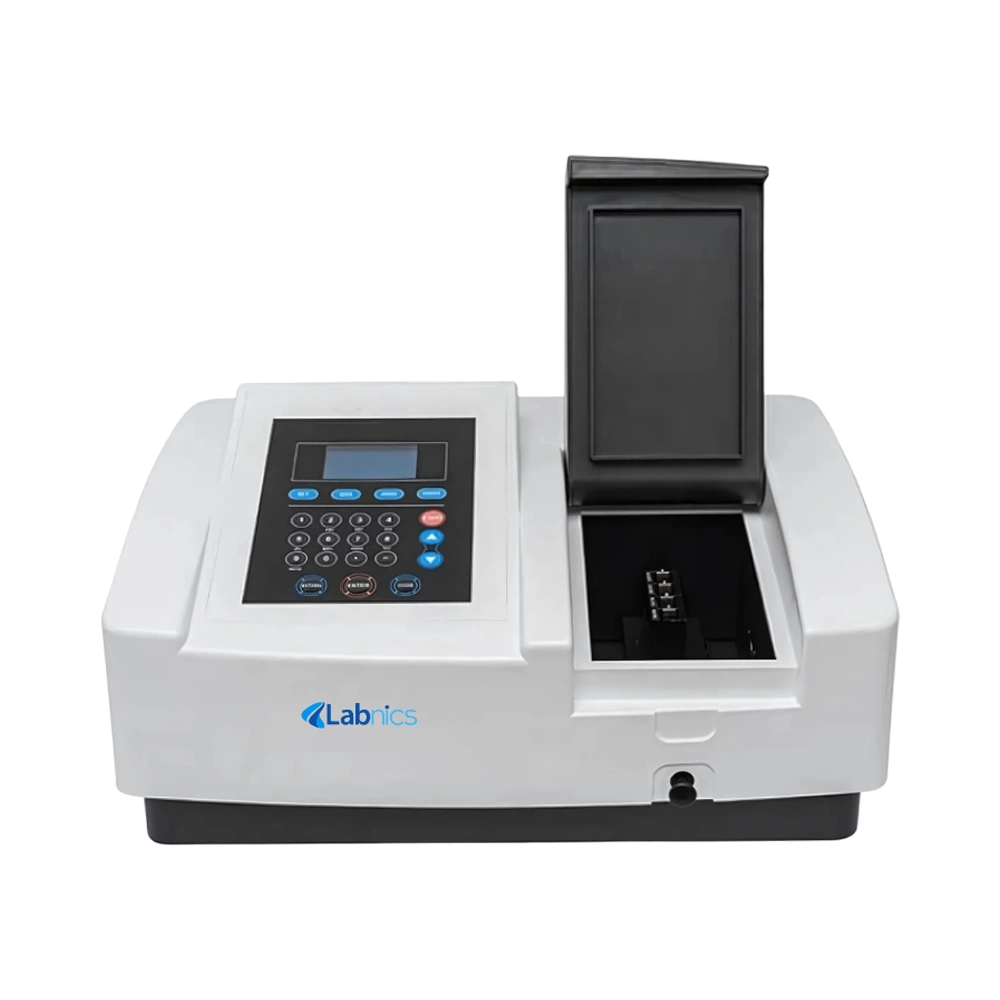
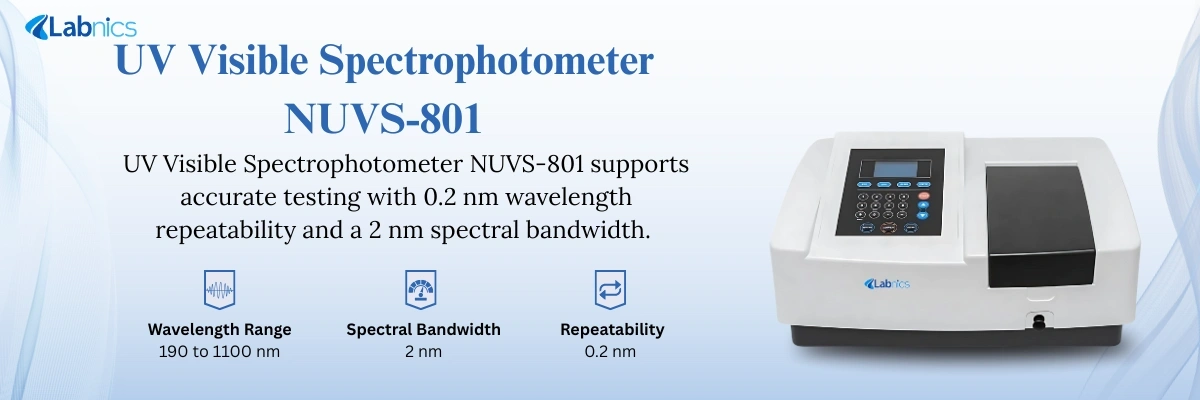
Single Beam UV-Vis Spectrophotometer NSUVS-401 supports accurate testing with 0.2 nm wavelength repeatability and a 2 nm spectral bandwidth. It comes with a user-friendly interface for smooth and efficient operation. Our unit offers USB connectivity for quick data transfer and device integration. It uses advanced computer processing for faster and more accurate operation. This UV Visible Spectrophotometer features a compact design for easy placement and handling.
FAQ for Single Beam UV-Vis Spectrophotometer NSUVS-401
1: What should I do if the Single Beam UV-Vis Spectrophotometer NSUVS-401 displays unstable or fluctuating readings?
If the UV-Vis Spectrophotometer NSUVS-401 gives inconsistent results, check for clean cuvettes, ensure samples are correctly placed, confirm stable environmental conditions, and verify that the instrument is properly calibrated.
2: How should I maintain the Single Beam UV-Vis Spectrophotometer NSUVS-401 for long-term performance?
To maintain the Single Beam UV-Vis Spectrophotometer NSUVS-401, regularly clean optical components, avoid exposure to dust and moisture, and follow recommended calibration and servicing schedules.
3: Is the Single Beam UV-Vis Spectrophotometer NSUVS-401 compatible with external devices for data transfer?
Our Single Beam UV-Vis Spectrophotometer NSUVS-401 features USB connectivity that enables fast and secure data transfer to computers or other devices, supporting efficient workflow and data management
4: Can the Single Beam UV-Vis Spectrophotometer NSUVS-401 be used to test multiple samples at the same time?
Yes, the Single Beam UV-Vis Spectrophotometer NSUVS-401 is equipped with a quadruple sample chamber, allowing simultaneous measurement of multiple samples, which is ideal for high-throughput laboratories.
5: How does the automatic wavelength selection feature enhance the functionality of the Single Beam UV-Vis Spectrophotometer NSUVS-401?
The automatic wavelength selection in the Single Beam UV-Vis Spectrophotometer NSUVS-401 allows the system to choose the correct wavelength for each analysis, improving operational efficiency and minimizing manual adjustments.