Gel Documentation System NGDS-300 features a 5.2-megapixel camera, providing clear and precise imaging. This system captures images over an area of 195 × 245 mm, allowing for flexible use. Our unit comes with dedicated software, enabling efficient data processing. It simplifies the imaging workflow, making the process accessible for users. It ensures reliable and stable results every time.
$7,313.00
Specifications
| Camera | 5.2 megapixels |
| Lens | High resolution auto-focus lens |
| Image area | 195×245 mm |
| Software | Image capture and analysis software |
| Dimension (L×W×H) | 430×380×690 mm |
| Net weight | 30kg |
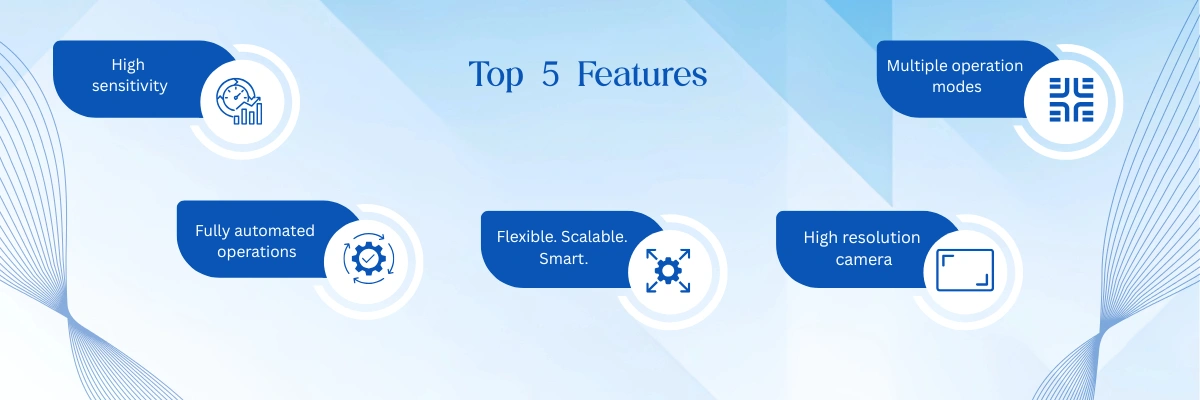
Features
Applications
Ask Expert
FAQ for Gel Documentation System NGDS-300
1: What advantages does the 5.2-megapixel camera offer in the NGDS-300?
The high-resolution 5.2-megapixel camera captures detailed and sharp gel images, which is essential for accurate analysis. It enhances visibility of faint bands and small molecular differences in nucleic acid or protein gels. This ensures that researchers can trust the clarity and quality of their imaging results.
2: How large of an imaging area does the system support?
The Gel Documentation System NGDS-300 covers a generous imaging area of 195 × 245 mm, allowing for flexibility in gel size and multiple samples per run. This is especially useful for high-throughput labs or when comparing multiple samples side by side. It supports both small and large-format gels with ease.
3: What is the role of the included software in the imaging process?
The Gel Documentation System comes with integrated image capture and analysis software designed to streamline the imaging workflow. Users can capture, analyze, and export data efficiently with minimal training. The software improves reproducibility and simplifies post-imaging processing.
4: How does the automated operation benefit laboratory use?
Fully automated features, including auto-focus and image optimization, reduce manual intervention and human error. This makes it easier for new users to achieve consistent results. It also saves time, especially in high-throughput environments.
5: What are the safety and maintenance considerations for this system?
Keep the camera lens clean and free from dust, and regularly check the software for updates. Ensure the device is placed on a stable surface and avoid exposure to harsh environmental conditions. Routine maintenance ensures long-term reliability and imaging consistency.