
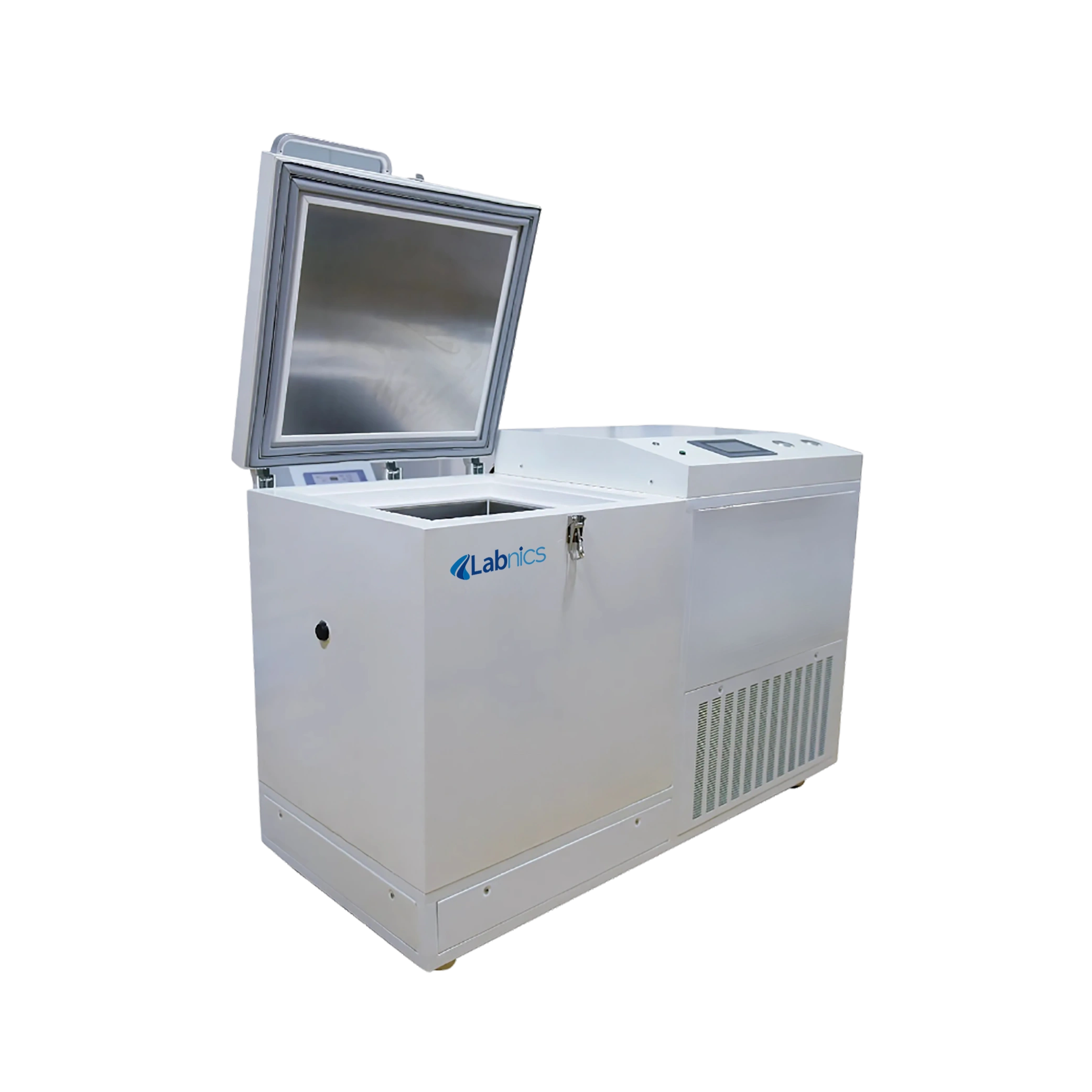
Chest Freezer NCF-100 comes with a 150L capacity, providing ample space for storing temperature-sensitive samples. It supports a wide temperature range from -120°C to -150°C for deep and stable freezing. This unit includes a dual self-contained refrigeration system to ensure consistent performance. It offers intelligent control through a 7-inch LCD for easy monitoring and operation. Our freezer saves energy with a VP insulation panel that enhances thermal efficiency.
$7,875.00
Specifications
| Capacity | 150L |
| Internal temperature | -120 to -150ׄ°C |
| Power supply | AC220,50Hz |
| Internal dimension | 540×480×582mm |
| Overall dimension | 1680×828×1190mm |
| Packaging dimension | 1700×850×1250mm |
| Net weight | 325kg |
| Gross weight | 400kg |
Features
Applications
Ask Expert
FAQ for Chest Freezer NCF-100
1: How does the dual refrigeration system benefit the user?
The Chest Freezer features a dual self-contained refrigeration system that ensures continuous cooling even if one system fails. This provides extra safety for stored materials and minimizes the risk of sample loss.
2: Is the Chest Freezer energy efficient?
Our Chest Freezer includes a VP insulation panel and a 4-stage cascade system, which helps reduce energy consumption by up to 30%. This allows for cost-effective and sustainable operation over time.
3: What safety features does this Chest Freezer NCF-100 offer?
Our Chest Freezer offers multiple protection features such as temperature alarms, door open alerts, power failure warnings, and password protection. These ensure safe operation and protect stored samples.
4: How quiet is the Chest Freezer NCF-100 during operation?
The Chest Freezer is designed with optimized refrigeration technology and noise-reduction features. This ensures minimal noise levels, making it ideal for quiet lab or clinical environments.
5: How often should the Chest Freezer NCF-100 be cleaned?
It is recommended to clean the interior and exterior surfaces every 2 to 3 months. This helps maintain hygiene and ensures optimal performance over time.
6: Does the Chest Freezer support energy-efficient operation?
Our Chest Freezer is built with energy-efficient components that reduce power consumption without compromising performance. This helps in long-term use while maintaining cost-effectiveness.
7: How durable is the construction of the Labnics Chest Freezer?
The Chest Freezer is built with robust materials and a corrosion-resistant inner chamber to ensure long-lasting performance. This makes it suitable for continuous use in demanding lab, clinical, or industrial environments.
8: What happens if the internal temperature goes out of range?
Our Chest Freezer is equipped with built-in safety alarms that alert in case of temperature deviations or power failures. This ensures critical samples remain protected at all times.
9: How often should a Chest Freezer be cleaned?
It is recommended to clean the chest freezer every 3 to 6 months, depending on usage. Regular cleaning prevents frost buildup and maintains hygienic storage conditions for sensitive materials.
Labnics Chest Freezers come in various capacities to suit diverse laboratory storage requirements. They operate efficiently across a wide ultra-low temperature range for optimal preservation. These units feature high-efficiency compressors and thick insulation for consistent temperature control. They include advanced safety features for reliable operation and sample protection. Our freezers are built with corrosion-resistant inner chambers and durable exteriors for long-term use.