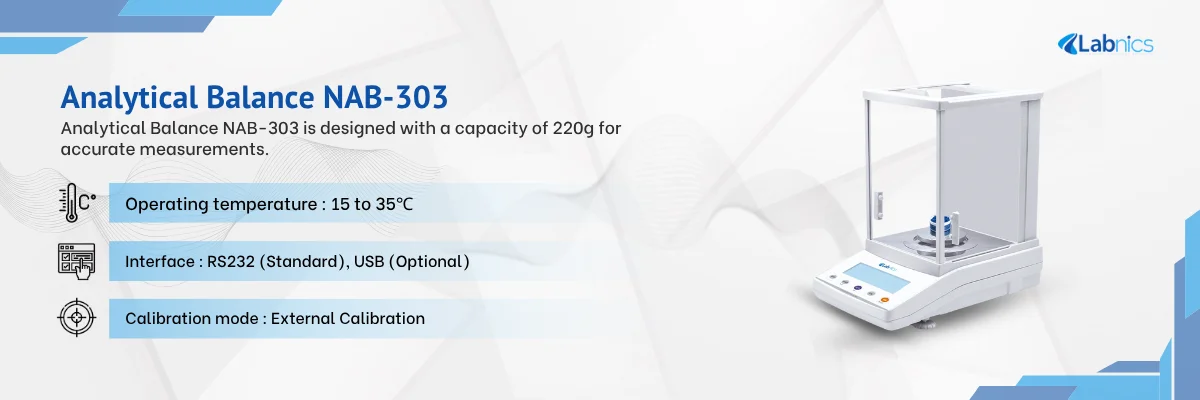
Analytical Balance NAB-303 is designed with a capacity of 220g for accurate measurements. It operates within a temperature range of 15 to 35℃, ensuring consistent performance. This unit features a pan size of Φ80mm, providing ample space for weighing various items. It is made with an aluminum shell, offering durability and protection from external elements. Our analytical balance includes an LCD with a white backlight and black font for clear visibility even in low light.
FAQ for Analytical Balance NAB-303
1: What makes the analytical balance NAB-303 suitable for precise measurements up to 220g?
The Analytical Balance NAB-303 offers a readability of 0.0001g and repeatability of ±0.0002g, ensuring highly accurate measurements for scientific and industrial uses.
2: What safety features are incorporated in the analytical balance NAB-303?
The analytical balance NAB-303 includes built-in overload protection and a fault detection system to safeguard the balance and alert users to operational issues.
3: Can the analytical balance NAB-303 be connected to external devices for data transfer?
Yes, the analytical balance NAB-303 is equipped with an RS232 interface as standard and offers optional USB connectivity for easy integration with printers and data management systems.
4: How does the draft shield improve weighing results?
The draft shield on the NAB-303 prevents air currents and environmental interference, ensuring stable and precise weighing.
5: What should I do if the analytical balance NAB-303 shows unstable readings?
If readings are unstable, verify the analytical balance NAB-303 is placed on a level, vibration-free surface with the draft shield closed, and that ambient temperature is between 15 and 35?.
6: In what industries is the analytical balance NAB-303 commonly used?
The analytical balance NAB-303 is widely used in laboratories, medical facilities, research centers, and manufacturing plants requiring precise and reliable weighing.
7: Why does the Analytical Balance have a glass shield?
The transparent glass shield is designed to block external air drafts and dust. This ensures consistent weighing conditions and prevents fluctuation in readings. It helps protect both the sample and the measurement integrity.
8: Is the Analytical Balance easy to calibrate?
Most analytical balances include internal or external calibration options. Internal calibration is automatic and ensures precision without manual effort. External calibration allows the use of certified weights to validate accuracy regularly.
9: How durable is an Analytical Balance?
Analytical balances are designed with sturdy materials and a sealed weighing chamber. This makes them durable and resistant to environmental contamination. Proper handling and regular maintenance extend their lifespan.
10: How often should an Analytical Balance be cleaned?
Cleaning should be done regularly, ideally after each use. This prevents dust, residue, or chemical spills from affecting accuracy. Use a soft brush or lint-free cloth and avoid harsh chemicals that may damage internal components.