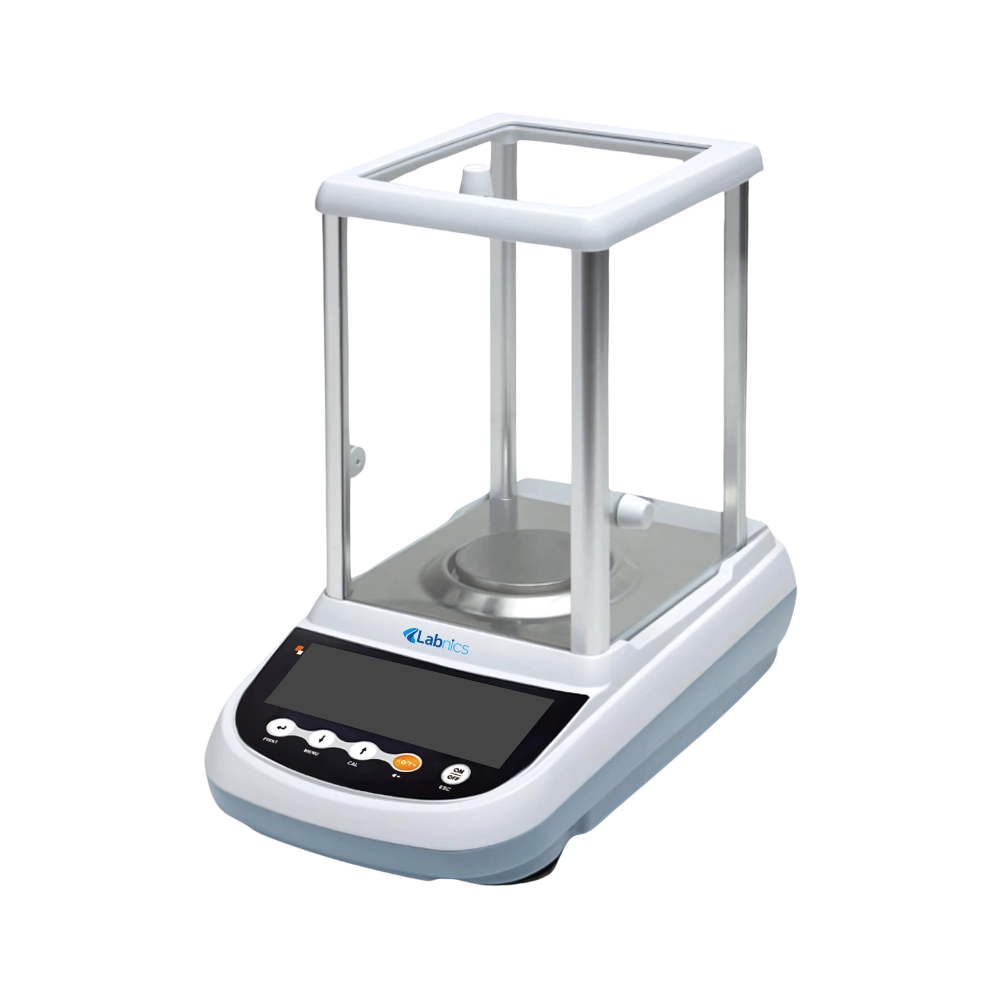
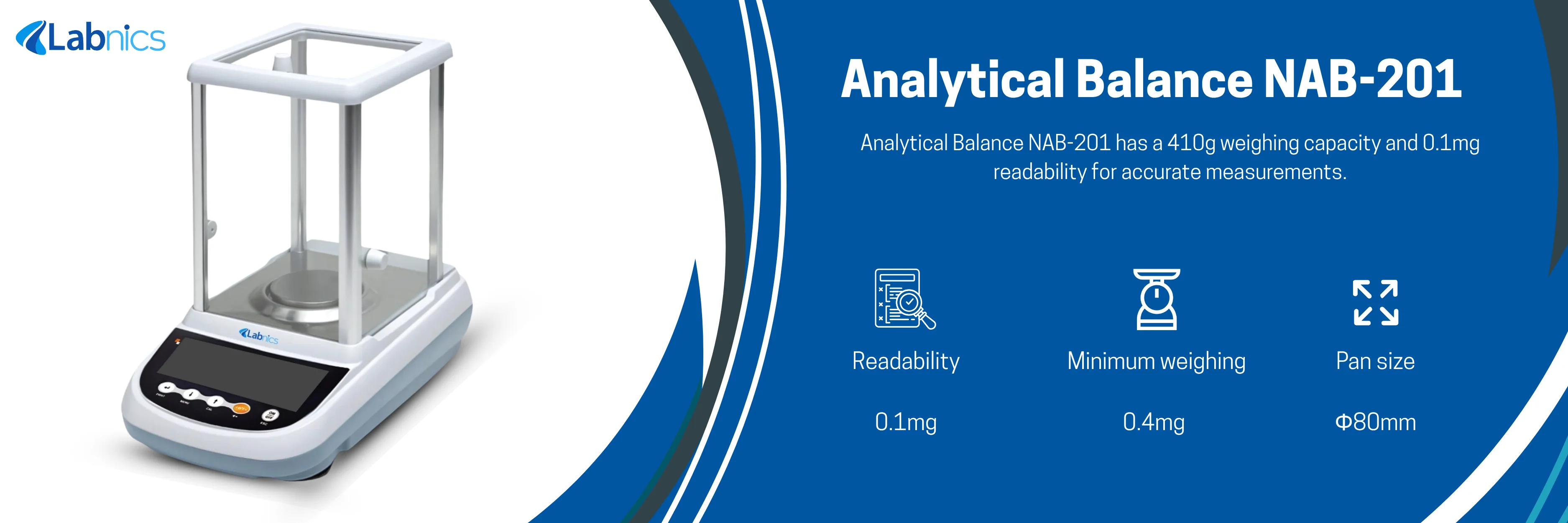
Analytical Balance NAB-201 has a 410g weighing capacity and 0.1mg readability for accurate measurements. It features a stable load cell that is resistant to temperature and time changes. Our unit comes with a draft shield to protect readings from air currents and environmental factors. It includes an RS232 interface for easy data transfer to external devices. This analytical balance offers a backlit LCD display for clear readings in low-light conditions.
FAQ for Analytical Balance NAB-201
1: What should I do if the readings fluctuate?
Ensure the balance is placed on a stable, level surface using the built-in level indicator. Close the draft shield during use and avoid drafts, vibrations, or rapid temperature changes.
2: What is the minimum weight that the analytical balance NAB-201 can accurately detect?
The minimum weighing value is 0.4 mg. For best results, avoid weighing below this limit, as readings may become unreliable.
3: Does the balance support multiple weighing units?
Yes, the analytical balance NAB-201 features multiple unit conversion options to cater to various regional or application-specific needs.
4: What is the purpose of the overload alarm?
The overload alarm protects the electromagnetic force sensor by alerting users when weight exceeds safe limits, helping avoid permanent damage.
5: How should I maintain and clean the NAB-201 for long-term use?
Wipe down surfaces with a soft, lint-free cloth and avoid harsh chemicals. Keep the draft shield clean and store the unit in a dry, dust-free area when not in use.
6: Why does the Analytical Balance have a glass shield?
The transparent glass shield is designed to block external air drafts and dust. This ensures consistent weighing conditions and prevents fluctuation in readings. It helps protect both the sample and the measurement integrity.
7: Is the Analytical Balance easy to calibrate?
Most analytical balances include internal or external calibration options. Internal calibration is automatic and ensures precision without manual effort. External calibration allows the use of certified weights to validate accuracy regularly.
8: How durable is an Analytical Balance?
Analytical balances are designed with sturdy materials and a sealed weighing chamber. This makes them durable and resistant to environmental contamination. Proper handling and regular maintenance extend their lifespan.
9: How often should an Analytical Balance be cleaned?
Cleaning should be done regularly, ideally after each use. This prevents dust, residue, or chemical spills from affecting accuracy. Use a soft brush or lint-free cloth and avoid harsh chemicals that may damage internal components.